Sully’s cabin
Bones & AllSully’s cabin is at once a rough country refuge and the place where Maren discovers the truth about Sully’s connection to her father. Its well, woodstove, patchwork quilts, and welcoming meal make it briefly resemble a home; its hidden collection of other people’s belongings, including Francis Yearly’s staff ID, turns that apparent shelter into a site of menace. The cabin’s most decisive change is not architectural but relational: the old man who offers Maren and Lee a place to stay ultimately becomes the threat from which Maren must escape.
Setting and Domestic Arrangement
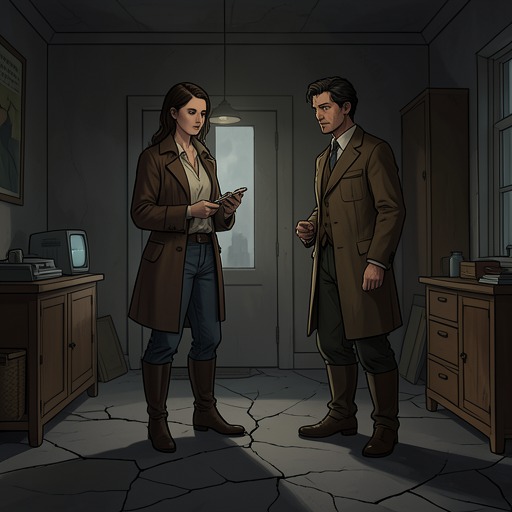
The cabin is old but sturdy-looking, with a well and cast-iron hand pump just off the back porch. Inside, a sitting room contains a woodstove and braided rug, while at least three or four mounted deer heads crowd the wall; one stag’s antlers nearly graze the ceiling. These details establish a rustic interior organized around hunting and a practical, self-contained way of life. They also give the room a strong visual presence: the heads watch over the domestic space, making the cabin’s coziness inseparable from its display of hunted animals.
The sleeping arrangements are spare. There are two bedrooms, one reserved for Sully, and a room with two twin beds under red-and-blue patchwork quilts for the young visitors. Sully asks whether they are comfortable sharing and offers Lee the couch as an alternative. The arrangement makes the cabin hospitable without disguising its limits: the guests are accommodated, but there is little privacy, and they are staying within the old man’s own space. After Sully wishes them goodnight, Lee locks the bedroom door. That small act sets a boundary inside a house that has been offered as safe lodging, while also anticipating how inadequate a locked door will prove to be.
Refuge, Hospitality, and Unease
Sully describes the cabin as one of his usual places to return to when things become sticky, where nobody is likely to bother him. He presents having such a place as practical advice for Lee. The cabin is therefore more than a stopping point: for Sully it is a retreat, a familiar refuge from other people and from whatever difficulties he means by sticky. Lee’s pointed repetition of the phrase, followed by his observation about the mounted deer, makes clear that he does not simply accept Sully’s account at face value. The same rooms that signal Sully’s comfort and familiarity invite Lee’s suspicion.
For Maren, the hospitality has a more intimate force. At dinner she thinks of her real grandfather, who would not cook for her or offer her somewhere to stay, and thanks Sully for looking out for her as well as for the meal. The contrast makes the cabin temporarily answer a need for care that her family has not met. Lee’s eye-roll as Maren thanks Sully complicates that warmth: he is present for the gesture but does not share its uncomplicated gratitude. In this early stay, the cabin can hold both things at once—the relief of being received and the unease of relying on a man Lee watches warily.
The cabin’s objects extend its domestic appearance. During the evening, Maren tries to knit with Mrs. Harmon’s yarn and needles, then searches an end table and finds playing cards, a book of Mad Libs, a bird-watching guide, jacks, and a crochet basket with bright red acrylic yarn. These ordinary diversions make the rooms seem lived in and usable, as if they were prepared for quiet hours rather than merely for concealment. The later discovery of the objects hidden elsewhere in the cabin changes the meaning of that familiarity: the house is not only furnished for its occupants and guests, but also contains the traces of people whose possessions Sully has taken.
Hidden Possessions and the Family Revelation
In a cupboard by the back door, Maren expects to find practical supplies such as citronella candles or board games. Instead, she encounters a crowded assortment: clothing, women’s jewelry, Walkmans, collectible coins in plastic cases, pewter tableware, and miscellaneous knickknacks. The accumulation is private and concealed, not arranged as the visible deer heads are. Reaching into it, Maren recognizes an object by its contours before drawing it out: Mr. Harmon’s Sphinx trophy. She understands it as more than a keepsake, reasoning that Sully takes things he can sell rather than preserving mementos of victims. That recognition makes the cupboard evidence of predation, not eccentric collecting.
The bedroom deepens the discovery. It is dark, the bed is made, and the room is crowded with things that could not fit in the cupboard, including lamps, clocks, and porcelain dolls with rolling glass eyes. Among the bedside objects are more jewelry, an unfamiliar tarnished silver flask, and credit cards in different names. Most important is a national park staff ID labeled Francis Yearly, with a blurry black-and-white photograph in which Maren can still make out her father’s smile. The card brings the hidden inventory into direct contact with Maren’s own family history. She hides both it and the trophy in the nightstand when she hears a truck engine, headlights, and Sully returning to the porch.
When Sully later tells Maren that he saw she had found the ID card, she asks how he got it. His answer is that Francis left it there; then he identifies Francis as his son. The cabin has thus concealed not only stolen property but a family relationship Maren did not know about. The change in her understanding is immediate: the ID card’s presence is no longer an unexplained trace of her father but evidence that he had been inside Sully’s private refuge. The cabin becomes the point at which Maren’s questions about Sully and her father converge.
From Shelter to Place of Attack
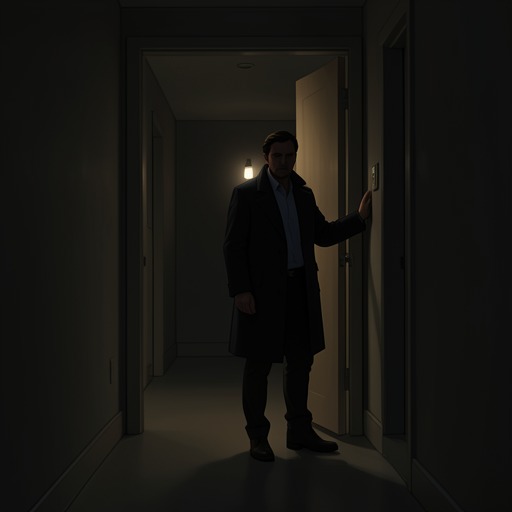
The final bedroom encounter overturns the cabin’s earlier promise of refuge. Maren wakes from a confused dream in which Mrs. Harmon vanishes and her mother seems to call her back to awareness. For a moment she imagines that her mother has changed her mind and come to find her; when she wakes fully, Sully is already sitting in a chair in the darkened bedroom. The room that had held twin beds for guests now confines Maren with the man whose connection to her father she has just learned.
Sully’s claim that he only eats people after they are dead is contradicted by the violence that follows. Maren knows he has the knife he used to peel an apple. As he lunges, she kicks off the quilt; he gets on top of her and holds her arms while her legs remain free, and the blade presses against her left forearm. His defense—that he does not always let people die on their own time—exposes the danger hidden inside his distinction. At the cabin, hospitality and violence occupy the same domestic spaces: the bed, the quilt, and the private bedroom that once seemed to offer rest become part of the attack.
The cabin’s narrative significance lies in this reversal. Its early details promise warmth, shelter, and a place apart from the road; its hidden objects disclose that its privacy also protects Sully’s activities. Maren first receives care there, then finds the evidence that links Sully to Francis, and finally faces Sully’s assault inside the bedroom. The place does not change its basic shape, but what its rooms mean changes completely: refuge becomes concealment, and concealment becomes danger.